In adenomyosis the tissue that lines the uterus (endometrium) grows within the muscular outer walls of the uterus. This is most likely to happen from the age of 30-50.
Adenomyosis isn’t the same as endometriosis (a condition in which the uterine lining is implanted outside the uterus).
Although the cause of adenomyosis remains unknown, the disease disappears after menopause.
SIGNS AND SYMPTOMS
Excessive menstrual bleeding - heavy or prolonged.
Severe cramping pain (dysmenorrhea) during your periods.
Menstrual cramps that last throughout your period and worsen as you get older.
Pain during intercourse.
Your uterus may increase to double or triple its normal size. You may notice that your lower abdomen seems bigger or feels tender.
Endometrial hyperplasia occurs when the uterine lining (endometrium) grows too thick as a result of estrogen stimulation (or not enough progesterone).
Endometrial hyperplasia is a non-cancerous condition, however, hyperplasia with atypia (abnormal cells) is considered precancerous. It is best treated surgically with a hysterectomy.
WHO IS AT RISK
Older women experiencing menopause
Overweight
Women with polycystic ovarian disease
Never having been pregnant
Early menarche
Obesity / diabetes mellitus
WHAT ARE THE SYMPTOMS OF ENDOMETRIAL HYPERPLASIA
Abnormal uterine bleeding
Contact your doctors if you have
Heavy periods
Shorter cycles
Prolonged periods
Spotting between periods
HOW IS THIS DIAGNOSED
1. USG - Ultrasound - your doctor will ask you to get an ultrasound done to measure the thickness of the endometrium.
If the endometrium is very thick the possibility of a uterine polyp has to be considered.
2. Hysteroscopy with a Dilatation and Curettage - A hysteroscopy will allow the surgeon to actually see the lining of the uterus and thereby determine how healthy it is.
D & C - following the hysteroscopy he/she may do a curettage and the material will be sent for histopathological evaluation.
HOW IS ENDOMETRIAL HYPERPLASIA TREATED
The various treatment options depend on
The amount of vaginal bleeding
The type of hyperplasia. If the cells are abnormal or atypical.
If you are planning a pregnancy.
Discuss the various choices with your doctor.
Progesterone therapy - either orally or through an intrauterine device. This treats the hormonal in balance.
Hysterectomy may be advised if
You are post-menopausal.
If you do not respond to treatment and the bleeding is persistent and heavy.
If the hyperplasia is of an advanced type that may progress to malignancy.
If the hyperplasia worsens over a period of time. This can be found out by a repeat biopsy (hysteroscopy) often a few months of treatment.
Tubal ligation or tubal sterilization is a type of permanent birth control.
WHAT IS DONE.
During tubal ligation the fallopian tubes are cut, blocked or removed. This blocks the path of the egg which travels from the ovaries to meet the sperm.
WHY IS IT DONE.
Female sterilization is one of the most common procedures as a method of permanent family planning.
It does not protect against sexually transmitted diseases (STDs)
It may decrease the chance of ovarian cancer, more so if the fallopian tubes are removed.
WHEN IS IT DONE.
Following a normal vaginal delivery.
During a C-section
Anytime - also called an ‘Internal T.L.’
Can be done along with a MTP.
HOW IS IT DONE.
In RASHMI HOSPITAL, except during a C-section we perform a Tubal ligation through minimally invasive technique.
We perform a laparoscopic T.L.
It is done as a day care procedure under general anaesthesia. You can go home in a few hours.
Complications are rare.
WHAT CAN YOU EXPECT
It is a permanent birth control method.
Tubal Ligation reversal can be attempted but the surgery is long and not always successful.
Rarely the procedure can fail. When the procedure fails there is a risk of an ectopic pregnancy. This requires immediate treatment.
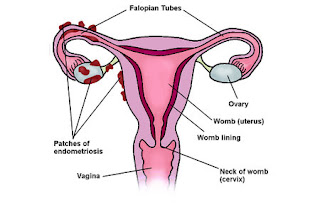
Endometriosis is an often painful disorder of the female reproductive system. The tissue that lines the inside of the uterus is called the endometrium. In endometriosis the lining grows outside the uterus, most commonly on the fallopian tubes and ovaries. Rarely it can spread beyond that onto the bladder, bowel, vagina etc.
WHAT HAPPENS IN ENDOMETRIOSIS
During your menstrual cycle, hormones signal the lining of your uterus to thicken to prepare for a possible pregnancy. If a pregnancy does not occur, the hormone levels decrease, causing the thickened lining to shed. This produces bleeding that exists through your body through the vagina-your monthly period.
When the lining of the uterus is located elsewhere it continues to act in the same way - the lining thickens, breaks down and bleeds. But it has nowhere to go or exit the body. So it get trapped.
Trapped blood may lead to the growth of cyst - CHOCOLATE CYSTS. Cysts cause scar tissue and adhesions - that binds organs together.
This causes pain and infertility.
SYMPTOMS OF ENDOMETRIOSIS 1. PAIN - before and during periods. Can be very severe and increases over time. 2. INFERTILITY 3. PAIN WITH INTERCOURSE 4. OTHERS - pain with bowel movements or urination - bloating - nausea and vomiting
Endometriosis is most likely to occur in women who haven’t had children - Some have an inherited tendency
It usually takes several years after the onset of menstruation (menarche) to develop
When menstruation ends permanently with menopause or temporarily with pregnancy, the symptoms stop.
WHEN TO SEE A DOCTOR
Severe pain during your periods or a history of infertility.
Endometriosis can be diagnosed by
ULTRASOUND - either abdominally or trans-vaginal.
LAPAROSCOPY - sometimes during a routine or a diagnostic laparoscopy the doctor can directly visualise the cysts.
WHAT ARE YOUR TREATMENT OPTIONS IF YOU HAVE ENDOMETRIOSIS
If your symptoms are mild and you are not planning a pregnancy anytime soon your doctor may recommend
Pain Medications
Hormone Therapy
LAPAROSCOPIC CONSERVATIVE SURGERY
If you are trying to get pregnant, laparoscopic surgery to remove the cysts and scar tissue will increase the chance of your success.
If you have endometriosis that causes severe pain you may also benefit from your surgery.
LAPAROSCOPIC HYSTERECTOMY
In severe cases of endometriosis, a total laparoscopic hysterectomy and the removal of both ovaries may be the best treatment. Hysterectomy alone is also effective, but removing the ovaries ensures that endometriosis will not return.
RASHMI HOSPITAL TEAM
At Rashmi Hospitalwe evaluate each patient on an individual basis to offer you options regarding endometriosis - especially with pain management.
WHAT CAUSES ENDOMETRIOSIS
The cause is really known but some theories have been put forward.
The retrograde menstruation theory - suggests that during menstruation some of the menstrual tissue backs up through the fallopian tubes and spills in the abdomen and grows.
Endometrial Cell Transport - through the blood system or lymph system
Genetic Theory - same families have a predisposition
A myomectomy is a surgery done to remove uterine fibroids while retaining the uterus, done in a women during child bearing age.
SYMPTOMS - uterine fibroids can cause.
Heavy periods
Painful periods
Infertility
Pelvic pressure
Increase in abdominal girth
AIM - the aim of a myomectomy is to remove the fibroids, and hence relive the symptoms and improve the chances of fertility.
TECHNIQUES OF MYOMECTOMY 1. Laparoscopic myomectomy - The surgery is performed through a few small incisions made on the abdomen. The fibroid is cut into pieces (morcellation) and removed through a small incision. Sometimes the fibroid is put into a bag (endo bag) and in-bag morcellation is done.
2.HYSTEROSCOPIC MYOMECTOMY - A fibroid that protrudes into the uterine cavity is called a submucosal fibroid. This is removed (resected) through a hysteroscope inserted through the vagina and cervix.
3.ABDOMINAL MYOMECTOMY - A large open cut is made in the abdomen.
WHAT TO EXPECT
1.You will need to come in the morning of the surgery on an empty stomach.
2. You will be prepared for general anaesthesia.
3.Depending on the procedure you can go home late evening (hysteroscopic myomectomy) or stay overnight (laparoscopic myomectomy)
4. As we perform only minimally invasive surgery here at Rashmi Hospital you will have.
Less pain
Shorter hospital stay
Quicker recovery
A much smaller scar; as compared to an open procedure.
FERTILITY AND LAPAROSCOPIC MYOMECTOMY Women who have undergone a laparoscopic myomectomy have a good chance of improved fertility. Results are better in younger women with only 1 fibroid.
We advise waiting 6 months before planning a pregnancy, this gives time for the uterus to heal.
PREGNANCY RISKS AFTER A MYOMECTOMY As the uterus has been operated upon, the scar on the uterus makes that area weak, which can rupture during labor. A cesarean section may be advised around 38 weeks of pregnancy.
WILL THE FIBROIDS COME BACK Yes, they can come back especially in
Hysteroscopy is a surgical procedure where a small telescope (the size of a pencil) is used to inspect the inside of the uterus. A camera is attached to the end of the telescope and the image is viewed on a video monitor. Surgery is carried out while looking at the monitor.
DIAGNOSTIC HYSTEROSCOPY is performed with a smaller instrument. It can be combined with a D & C (Dilatation and curettage) or an endometrial sampling.
OPERATIVE HYSTEROSCOPY. When a problem is diagnosed during a diagnostic hysteroscopy it can be cleared or operated upon at the same time.
The operative hysteroscope is larger and has parts which allows the physician to insert operating tools like scissors, cautery or a laser.
PROBLEMS THAT CAN BE TREATED
Uterine polyps.
Uterine septum.
Adhesions (a scar tissue) in the uterus.
Same types of tubal block.
Uterine fibroids.
An old IUCD that is ‘lost’.
ROLE OF SIMULTANEOUS LAPAROSCOPY and HYSTEROSCOPY.
The surgeon may advise a simultaneous laparoscopy
In infertility patients to check the potency of the fallopian tubes
When a bicornuate (double) uterus is suspected.
While doing tubal cannulation in patients with blocked tubes.
To aid in the prevention of uterine perforation if excessive hysteroscopy surgery is performed.
WHAT TO EXPECT.
You will come in the morning of surgery on an empty stomach.
You should be able to go home in the evening.
In general, you will be able to return to normal activity within 1-2 days.
Complications are infrequent, may be same mild cramping.
1.I will put on weight and have an early menopause.
Mood changes, dry skin etc are a sign of menopause. Menopause occurs when both the ovaries are removed and the production of the hormones stop. In a hysterectomy only the uterus is removed. Here in Rashmi Hospital, we retain the ovaries even in post menopausal women.
2.Along recovery period with bed rest.
At Rashmi Hospital all women who undergo a laparoscopic hysterectomy are home the next day and back to work or all normal activities within a week to 10 days.
3.A hysterectomy is very painful.
As we perform only laparoscopic hysterectomy, the cuts are very small and not painful. You can walk by evening and eat normal food too.
4.I will have a huge ugly scar.
No, a laparoscopic hysterectomy is done through a few small incisions (a cuts) which heal very well.
5.Sex is not enjoyable.
On the contrary some women enjoy sex more because.
The fear of pregnancy is no longer there.
Any condition like a deep fibroid which was causing painful intercourse is eliminated.
6.I will have back pain.
This is again a sign of menopause when women do not take calcium. Since your ovaries are left intact you will not experience back pain.
WHAT HAPPENS TO ME AFTER A HYSTERECTOMY.
You will be relieved of your symptoms like heavy periods, painful periods etc.
Hysterectomy, a medical term for the removal of the uterus, is commonly performed on patients ailing from uterine cancer, gynaecological cancer, uterine prolapse, persistent vaginal bleeding, chronic pelvic pain, fibroids, or endometriosis.
There are two ways of performing a Hysterectomy: Open and Laparoscopic.
Open Hysterectomy, although still practiced by many doctors, has some drawbacks. For one, it requires the doctor to make a large incision across the belly, due to which the patient has to spend 2-3 days in hospital care. Two, it leaves a scar on the body.
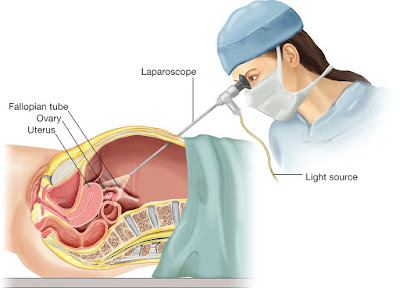
Laparoscopic Hysterectomy, on the other hand, is far less invasive. Instead of one big incision, the doctor makes a few incisions of about a centimetre each near the abdomen through which he lets in a laparoscope having a camera. The images taken by the camera are then projected to a high-resolution screen for the doctor to view and perform the surgery.
There are some clear advantages to Laparoscopic Hysterectomy, which include:
Less blood loss
Less scarring
Less post-operative pain; and
Quick recovery
There are several surgeons who continue to insist that Laparoscopic Hysterectomy is not an option where the size of the uterus is too large. A surgeon skilled in it, may, however, want to disagree to the view.
The important thing really is for patients to find a surgeon with the necessary skill and the experience - and, no less, having access to the right equipment - to carry out a laparoscopic hysterectomy.
Hysterectomy can be done in several ways:
Partial hysterectomy, which removes the uterus leaving the cervix in place.
Total hysterectomy, which removes both the cervix and the uterus
Hysterectomy and bilateral salpingo-oophorectomy, which remove the uterus along with the ovaries, fallopian tubes, and cervix.
Radical Hysterectomy, which removes the upper portion of the vagina, the surrounding tissues and also the lymph nodes.
Are there any risks related to Hysterectomy?
Hysterectomy is a relatively safe procedure. If at all some complications do arise during surgery, they can be controlled and treated.
The risks of performing a hysterectomy are:
Urinary tract may be damaged in a few cases; and
Bladder and rectum may also be damaged.
Other complications include:
Blood clots
Infections
Excessive bleeding; and
Adverse reactions to anaesthesia
Recovery
After hysterectomy, a patient is kept in the recovery room for a few hours under medical observation. Within a day or two of the surgery, she is fit to start walking.
Has your mother turned fifty? Is she suffering from abnormal bleeding and backache? If so, it is high time she should be taken to a gynecologist to diagnose the disease she is having. There are high chances that she might be having fibroids and have to go through a surgery to remove the fibroids. The doctor would probably suggest you to go for a Laparoscopic Myomectomy. Yes, the name of the treatment procedure is apparently not so cool but the net result of the treatment is purely genuine and transparent. Myomectomy means the removal of fibroids from uterus through a surgery. Not all hospitals would help you with Laparoscopic Myomectomy in Bangalore. Hence choosing the hospital that offers laparoscopic uterus fibroid removal surgery in Bangalore is most certainly a challenge. Rashmi Hospital, under the guidance of Dr. Deepak Rao, is a wise option because of its specialized surgical facilities and well-advanced treatment procedures.
Why should you go for Laparoscopic Myomectomy?
Preferring an open abdominal surgery over Laparoscopic Myomectomy would not give you the best possible outcome as the advantages are very much minimal. That is why most of the gynecologists suggest you Laparoscopic Myomectomy. Here is the list of a few advantages of the treatment:
Speedy recovery
Very less scars
Better pregnancy rates compared to other surgeries
Very small incisions
At the same time, there are some risks directly involved in it. They are:
Excessive blood loss
Very low chance of spreading a cancerous tumour
How is Laparoscopic Myomectomy carried out?
Prior to taking the surgery, it is highly recommended that the patient should inform the doctor the medicines and blood thinners he takes. This is because prolonged bleeding can happen if some medicines are taken by the patient.
A general anesthesia is given and a very small incision is made. After filling carbondioxide and a laparoscope inside the abdomen, it is viewed by the surgeon from outside. This laparoscope helps to observe the fallopian tubes, uterus and ovaries. A few other instruments are also inserted for a reason that the fibroids can be removed from the uterus. Then, the uterine muscles are stitched in a proper way that it retains the original position. Carbon dioxide is released and the incisions are closed.
The surgery does not take more than an hour. Also, it is possible for the patient to come back home on the same day. Rashmi Hospital provides a safe and sound Laparoscopic Myomectomy. It ensures transparency in all the services they are willing to give away. Now, is it possible for you believe that uterus fibroid surgery in Bangalore is not a herculean task?!!
Before knowing about Appendectomy, let us take a glance at “what is appendicitis”. Appendicitis is the condition when appendix gets inflamed, where the appendix is a worm-shaped pouch that projects out from cecum.
Brief Description on Appendectomy
An appendectomy is a common emergency surgery which is performed to treat appendicitis by the surgical removal of the appendix. Removal of appendix is the easiest and quickest way to treat appendicitis.
In 1735, the first report on appendectomy procedure came. A surgeon from the English army, Amyan, who performed appendectomy without anesthesia to remove an inflamed appendix.
Main symptoms of Appendicitis
Severe stomach pain
constipation or diarrhea
vomiting
loss of appetite
low fever
How is appendectomy performed
Appendectomy procedure can be performed by either open surgery or by Laparoscopic technique. The open method requires a 2 to 3-inch incision in the lower right–hand side of the abdomen, where laparoscopic appendectomy is a minimally invasive procedure by three small incisions in the abdomen area under general anesthesia.
For laparoscopic appendectomy procedure, firstly a cannula is inserted to inflate the abdomen with carbon dioxide gas that allows the surgeon to clearly see the appendix. After abdominal inflation, a laparoscope is inserted through one of the incisions, which is attached to a monitor that guides the surgeon to see inside the abdomen. The appendix is tied off with stitches and removed through the incisions. These incisions are then cleaned, closed, and dressed.
Small incisions and minimal scarring.......short surgery which usually takes only 15 to 30 minutes......less postoperative pain.......Short hospital stays......early return to normal activity.....
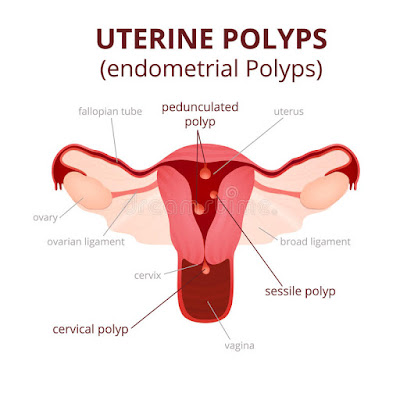
Polyps are the overgrowth of endometrial tissues, i.e. the inner lining of the uterus. It is sometimes called as endometrial polyps. The polyps may be oval or round and the size may range from millimeters to centimeters. Polyps can form as one or many.
What are the causes of Polyps? Even though the exact cause of polyps is unknown, yet hormonal swings are the considerable factor. Estrogen which thickens the endometrium each month also appears to be linked with uterine polyps’ growth.
What are the main symptoms of Polyps?
Many women with uterine polyps will have no symptoms at all. However, some women may face one or more of the below symptoms.
Infertility
Irregular menstrual period
Bleeding even after menopause
Vaginal spotting
Unusual blood flow during menstruation
Pelvic pain
Bleeding after coitus
In Hysteroscopy procedure, the uterus is examined for any abnormality. It is also used to remove abnormal growths such as polyps from the uterus.
Hysteroscopy Procedure
Hysteroscopy Treatment is performed as an outpatient treatment. It is done either in local or general anesthesia. The patient’s uterus is inflated with saline. The vaginal wall is opened with the help of speculum and hysteroscopy, a thin lighted tube is inserted into the uterus through the cervix. By doing so, the surgeon can view the uterus lining and any growth such as polyps, fibroids. Other instruments are inserted into the hysteroscopy to remove the polyps from the womb. Finally, the polyp/s is sent to the laboratory for a microscopic examination. Depends on the procedure and the condition, treatment time may fall between 10-60 minutes.
Advantages of hysteroscopy in polyps’ removal:
The procedure does not imply with any incisions
No abdominal wound and infections
No blood loss
Mild postoperative pain
Quick recovery time
Post-operative hysteroscopy
There are very mild discomforts felt by the patients after hysteroscopy
Abdominal cramping
Pain in the shoulder and upper abdomen
Bleeding or spotting
The above symptoms are common. If the symptoms go severe, then immediate medical intervention is necessary.
Dr. Deepak Rao is an ace gynecologist and laparoscopic surgeon. In his Rashmi Hospital, he provides world-class treatments and it owns the pride of being one of the best hospitals for hysteroscopy treatment in Bangalore.
The causes of infertility are many and varied and involve male, female or a combination of factors. In Vitro Fertilization is commonly known as IVF. This technique is a boon for those who are infertile and hope for a child. IVF is an assisted reproductive technology which involves retrieving eggs and sperms male and female partners and placing them together in a laboratory in some special conditions. The fertilized eggs are then transferred two to six days later into the woman’s uterus.
Rashmi Hospital, Bangalore is one of the best IVF centers in India which has been providing world-class facilities to the patients. They aim at evidence-based treatment and keeps transparency in all interactions with the patients. They have brought in the best-advanced technology, ensuring that all services are cost-effective.
Step I: Egg stimulating medications are prescribed as all the eggs will not develop or fertilize after retrieval.
Step II: Eggs are retrieved through a minor surgical procedure.
Step III: Sperms are collected from man.
Step IV: The sperm and egg together placed in the laboratory dish to encourage fertilization. In this stage sometimes an intracytoplasmic sperm injection is necessary, through this a single sperm is injected directly into the egg. Embryos are developed during this stage.
Step V: Embryos are transferred to the uterus of the woman. A catheter or small tube is inserted into the uterus to transfer the embryos.
Ectopic pregnancy is a condition in which fertilized egg is not attached to the uterus lining and attached some other place. Almost all the ectopic pregnancy is occurred in the fallopian tube and thus called as tubal pregnancy. The fertilized egg in an ectopic pregnancy cannot develop properly in the fallopian tubes as these tubes are not designed to hole a growing embryo. The condition needs proper treatment. Rashmi hospital in Bangalore provides excellent care and treatment for ectopic pregnancy.
It is recommended to visit a doctor if a female is experiencing a sharp pain in abdomen area or have uncommon bleeding. The physician will perform a pelvic test to locate the pain or a mass in the abdomen. Then an ultrasound is performed to confirm that the uterus has a developing fetus.
Medication of methotrexate to permit the body to absorb the scar tissue and save the fallopian tube
Surgery is needed by the fallopian tubes are ruptured, stretched or started bleeding
Laparoscopic surgery is also an option to perform surgery with the use of laparoscopy or laparotomy to remove the tissue. Rashmi hospital, Bangalore has fantastic laparoscopic surgery facilities.
Rashmi hospitalhas a well-developed and latest Gynecology related Treatment facilities in Bangalore. The hospital is an excellent center for treating fertility related problems.
Endometriosis
is a uterus disorder in which the tissue that develops the uterus
lining of the uterus is grows outside the uterine cavity. The uterus
lining is known as the endometrium. Endometriosis includes female
ovaries, fallopian tubes and the tissues lining in the pelvis. When the
endometrium grows on ovaries, bowel, and tissues lining of the pelvis,
endometriosis occurs. It is generally unusual for the endometrial tissue
to spread outside the pelvic region but it is again not impossible. The
growing of endometrial tissue outside the uterus is known as an
endometrial implant.
The
hormonal changes in the menstrual cycle disturbed the misplaced
endometrial tissue that causes the area painful and inflamed. Because of
this, the tissue will grow, thicken and break down and becomes stuck in
the pelvis. The stuck tissue in the pelvis area can cause
Severe pain specially during periods time
Irritation
Adhesions
Scar formation
Fertility problems
Endometriosis
is very common gynecological condition and its symptoms can vary from
female to female. The symptoms include painful periods, cramps, pain in
lower abdomen, heavy bleeding during menstruation and painful sexual
intercourse. Treatment for endometriosis includes medical and surgical
options that help to reduce the pain and manage any type of potential
complications. The major treatment procedures are
Pain medication
Hormonal therapy
Hormonal contraceptives such as patches, birth control pills
Gonadotropin releasing hormone (GRNH) agonist and antagonist
Danazol
Conservative surgery
Laparoscopy
Last resort surgery (hysterectomy)
Endometriosis is
a chronic problem with no cure, but it has not impacted the daily life.
Various effective treatments are available in the market to manage pain
and fertility problems. The risk factors for endometriosis include age,
family history, pregnancy history and menstrual history.
Rashmi hospital, Bangalore has best treatment facilities for endometriosis in Indra nagararea. The hospital provides best Laparoscopic Surgery in Bangalore and have qualified and experienced doctors to treat endometriosis and provides highly successful results.
Cholecystectomy is the surgical removal of the gallbladder. A gall bladder is a pear
shaped organ located just on the upper right side of the stomach just
below the liver. The digestive fluid called bile, which is produced
by the liver is collected and stored by the gall bladder.
Cholecystectomy
is performed when there is a pain and block of flow of bile in the
gall bladder. It is a very common surgical procedure which carries
only a small risk of complications.
Cholecystectomyis
most commonly performed by minimally invasive techniques. The
following are the steps of laparoscopic cholecystectomy:
First
the surgeon gives general anesthesia to the patient
Then
the surgeon makes four incisions around the umbilicus
The
surgeon then inserts four small narrow tubes through the incisions
for the laparoscopic camera and instruments.
The
laparoscopic camera which is inserted through the small belly port
provides the surgeon a magnified view of internal organs on a
monitor.
The
surgeon then inserts long specially designed instruments through the
other three ports helps the surgeon to seperate the gall bladder
from its attachments to the bile duct and the liver.
Finally,
the surgeon removes the gall bladder through one of the ports from
the abdomen and closes the incisions
Conditions
Treated
Cholecystectomy
is mostly performed to treat the following complications that affects
the gall bladder:
Cholecystitis:
Inflammation of the gall bladder
Cholelithiasis:
Gall stones in the gall bladder
Choledocholithiasis:
Gall stones in the bile duct
Cholangitis:
Infection of Bile duct
Pancreatitis:
Inflammation of pancreas due to gall stones
Benefits
of Laparoscopic Cholecystectomy
The
following are the main advantages of Laparoscopic Cholecystectomy
over open cholecystectomy
It
is a minimally invasive surgery
Lesser
pain
No
incision pain as occurs with open surgery
Recovery
time is much quicker
There
will be no scar on the abdomen after the surgery
Laparoscopic Fibroid removal is a revolutionized gynecologic surgery which uses laparoscopic instruments to perform the surgery. It is an outpatient surgery that offers short stay in the hospital and quick recovery. In the laparoscopic fibroid removal surgery, two or three half inch, tiny incisions are made to perform the surgery. A laparoscope is inserted through these tiny incisions. A laparoscope is a slight telescope that is inserted in the abdomen through the navel to see abdominal and pelvic organs. After opening the uterus covering, a fibroid is found, grabbed, and unbound it from the normal uterine muscle. The fibroid is then cut into little pieces with an instrument known as morcellator and removed from the body through tiny incisions.
The entire surgery takes 1-3 hours which is depends on size, number, and position of the fibroids. Patients can recover fast after the surgery due to these tiny incisions. The surgeon performs surgery by viewing it on the monitor.
Laparoscopic fibroid removal surgery is a safe and effective procedure when performed by a qualified and experienced surgeon. This procedure needs a good coordination between eye and hand and also a good knowledge of pelvic anatomy.
Rashmi hospital, Bangalore has best laparoscopic facilities for fibroid removal. The hospital has a team of qualified and experienced doctors to treat the problem.
A laparoscopic hysterectomy is an invasive surgical process to remove the uterus. This surgical process is recommended to the women patients who are unable to treat abnormal uterine bleeding or fibroids. In this process, a tiny incision is made in the belly button to insert a tiny camera. This camera helps doctor to watch the inside images on the screen and complete operation process. In the lower abdomen, 2-3 other small incision also made to monitor the process from different angles. Other specialized instruments are also inserted to help the removal process.
There are two types of laparoscopic hysterectomy. Laparoscopic supra-cervical hysterectomy keeps the cervix in place and Total laparoscopic hysterectomy removes the whole cervix and uterus. The operation of keeping cervix in place is little safer and faster. But if the patient have a history of cancerous changes in the uterus or cervix lining then it is advisable to remove whole uterus. In the other case, if the operation is performed for pelvic pain or endometriosis then it is advisable to remove cervix to reduce the chances of severe pain after the operation.
It is mandatory for the doctor to check full medical history of the patient and complete all physical examinations, blood tests of the patient, before recommending surgery. Laparoscopic hysterectomy patients are expected to suffer less post-operative pain in comparison to traditional hysterectomy or cesarean section patients.
Rashmi Hospital, Bangalore is a center for minimally invasive surgery and laparoscopy. Rashmi hospital has well-developed laparoscopic hysterectomy treatment facilities. The doctors of Rashmi hospital are highly experienced and committed to improving women’s health and providing best facilities for the treatments.
Laparoscopic
myomectomy is a minimally invasive procedure done for the removal of
uterine fibroids. Fibroids are benign (non-cancerous) growths forming in
the uterus commonly during the fertile or child bearing years of a
women.
The goal of laparoscopic myomectomy
is safe removal of the fibroids to eliminate the symptoms and
discomforts caused by it. It also aims at the reconstruction of the
uterus. Laparoscopic myomectomy is much more simplified and convenient
form of surgery, than the conventional open surgery method.
Scope of laparoscopic myomectomy
The procedure of laparoscopic myomectomy is preferred over hysterectomy in the following cases: -
In case of planning a pregnancy in future.
To alleviate the hindrance of fibroids with female fertility.
In cases where uterus removal is not preferred.
Laparoscopic myomectomy procedure
Laparoscopic myomectomy procedure is done under local or general anaesthesia. The procedure involves making a few incisions in the abdomen, near the navel and inserting a laparoscope through it to view the inside of the body. The images of the site are transmitted by the camera attached to the laparoscope.
The surgeon can then remove the fibroids, by viewing the inside through the monitor and using instruments inserted through the other incision. In the case of big sized fibroids, they are removed after cutting them into smaller parts. Hormonal therapies can also be administered to shrink the fibroids, before removing them. Benefits of laparoscopic myomectomy
Laparoscopic and other minimally invasive surgical procedures are gaining popularity because of their ease and simplicity when compared to conventional procedure. the main benefits of laparoscopic myomectomy are as described below.
Use of tiny or small incisions
Less stressful and discomfort when compared to conventional surgical procedures.
Relatively very less complications
Shortened period of hospitalisation
Helps avoid complications like bleeding that can occur in open surgical procedures.
Considerably painless.
Very less scarring
Fast recovery
Rashmi Hospital
is an advanced laparoscopic centre offering laparoscopic surgical
procedures for treating a wide array of gynaecological conditions and
infertility.